DVTs Affect Millions of Americans.
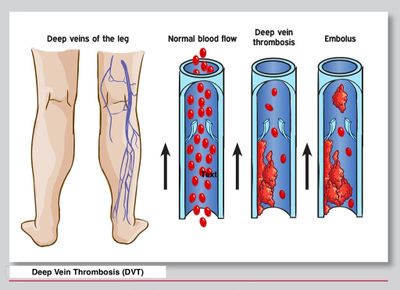
DVT is a blood clot that forms in the deep veins within the body
Most deep vein blood clots form in the lower legs or thighs, but can occur in other parts of the body. These clots, called an embolus, can break off and travel through the bloodstream to other parts of the body, like the lungs or heart, causing serious health risks. Deep vein thrombosis (DVT, or PE) is one of the least publicized health issues around, but one of the more serious. According to The Society for Cardiovascular Interventions, venous thrombosis affects roughly a million Americans per year, with a general lifetime risk factor of being 2% - 5%. That means there is a 1 in 20 chance of a person developing a clot.
Risk factors
Venous thromboembolism (VTE) is a spectrum of diseases involving deep venous thrombosis (DVT) and/or pulmonary embolism (PE). Without prophylaxis, the probable incidence of confirmed hospital-acquired DVT is approximately 10 to 40% of medical or surgical patients and 40 to 60% followings major orthopedic surgery [1link]. Venous thromboembolism carries significant hospital morbidities and mortalities. It has been estimated that 10% of hospital deaths are due to pulmonary embolism (PE).[1link] Therefore, VTE is considered the number one cause of preventable death among hospitalized patients.
There are many different factors that go into whether a person will form a clot. But the fact remains that there is no exact reason, only a list of risks that increase your chances of developing. Surgery is a large factor, and the risks and symptoms usually appear 5-10 days post-op. With today's shorter hospital stays after surgeries, that is most likely when a person is at home recovering and out of the direct care of their doctors. It's VITAL that life-saving DVT prevention does not end at the Hospital, but continues at home, when you are most vulnerable. Your Physician can prescribe an at-home device that can help with this.

Caprini Risk Model

How we can Help
Non-pharmacological DVT prophylaxis with compression devices plays a critical role in reducing the risk of deep vein thrombosis and pulmonary embolism, particularly in post-surgical, immobile, or high-risk patients. By promoting healthy blood flow and improving venous circulation in the lower extremities, compression therapy helps prevent blood pooling and clot formation without the bleeding risks often associated with anticoagulant medications. These devices provide a safe, effective, and non-invasive solution that supports patient recovery, enhances comfort, and can be used alongside pharmacological therapies as part of a comprehensive prevention strategy. The PlasmaFlow device is one of the best completely mobile compression devices on the market today, and can be ordered by your physician today and delivered to your doorstep within 72 hours!
_a3eqdm.jpg/:/rs=w:400,cg:true,m)